Radiant Heating Under a Mirror-Smooth Gypcrete Finish in Sandpoint
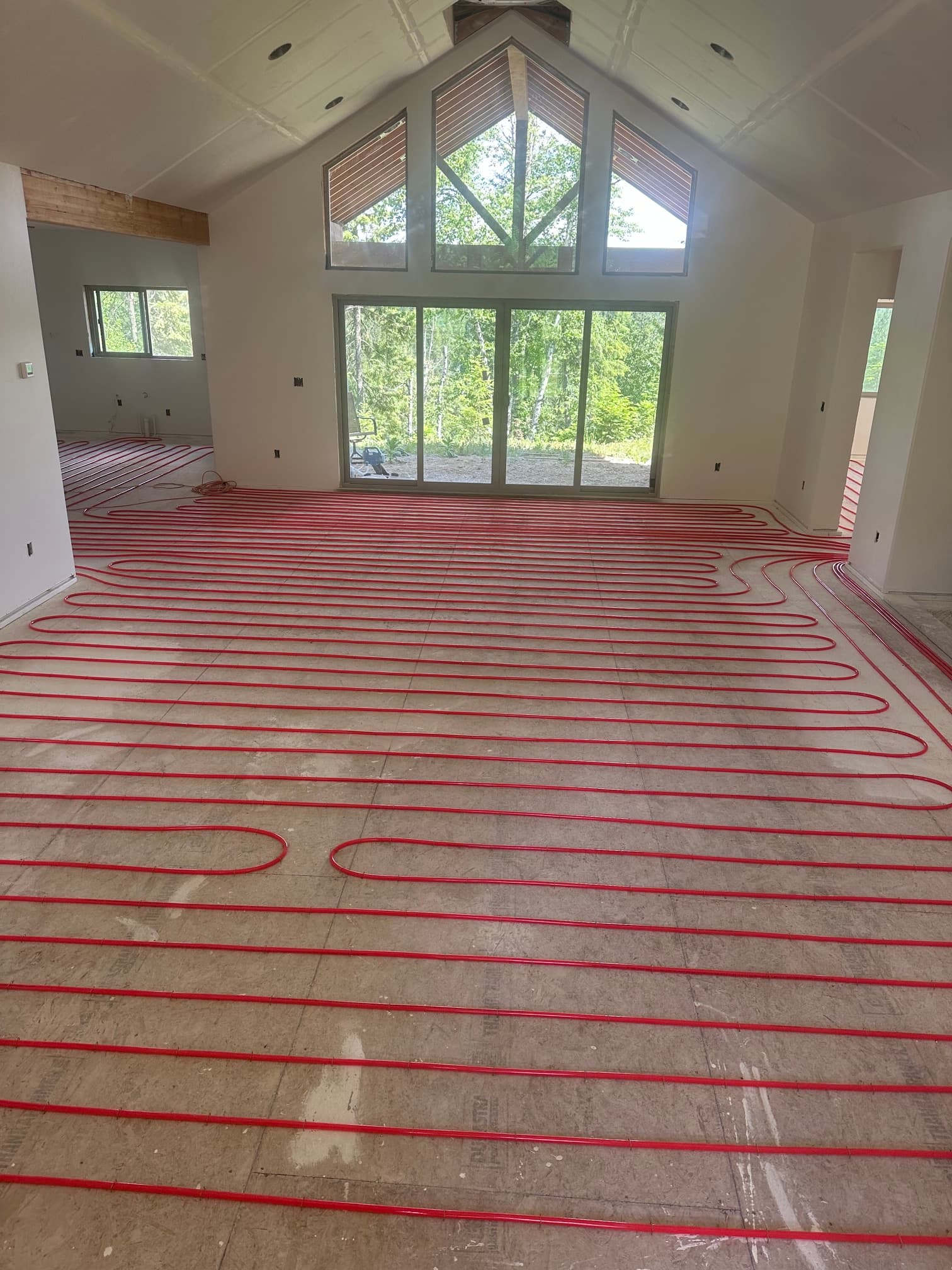

This Sandpoint home is a perfect example of what radiant heating looks like when it's done right - from the ground up. Before any finish goes down, there's a whole system of precision-laid PEX tubing that has to be planned, mapped, and installed without shortcuts. That's where this job started.
The tubing layout covers the entire open floor plan in tight, evenly spaced loops. Every bend is deliberate. Spacing consistency matters here because it directly affects how evenly heat distributes across the floor once the system is running. Sloppy layout means cold spots. We don't do cold spots.
Once the tubing is locked in and pressure-tested, gypcrete goes over the top. Gypcrete is a lightweight concrete mixture that's ideal for encapsulating radiant tubing - it conducts heat efficiently, bonds well, and when poured and finished correctly, it comes out smooth. Really smooth. The kind of smooth where you can see the treeline from the windows reflecting clean across the surface.
That mirror finish isn't just for looks, either. A flat, even gypcrete surface is critical for whatever flooring goes on top - tile, hardwood, LVP, you name it. Any low spots or ridges in the substrate will show up in the finished floor. So the quality of the gypcrete pour matters more than most people realize.
Radiant heating is one of those systems that's completely invisible once a home is finished, but you feel it every single day. No ductwork noise, no cold floors on winter mornings, no uneven heat from room to room. Getting it right during the build phase is everything - and that starts with the install underneath.