Crawl Space Moisture Fix: Fan, Dehumidifier, or Sump?
Foam-insulated crawl space collecting moisture? Learn when you need a sump pump, dehumidifier, vent fan, or a combo to finally dry it out.
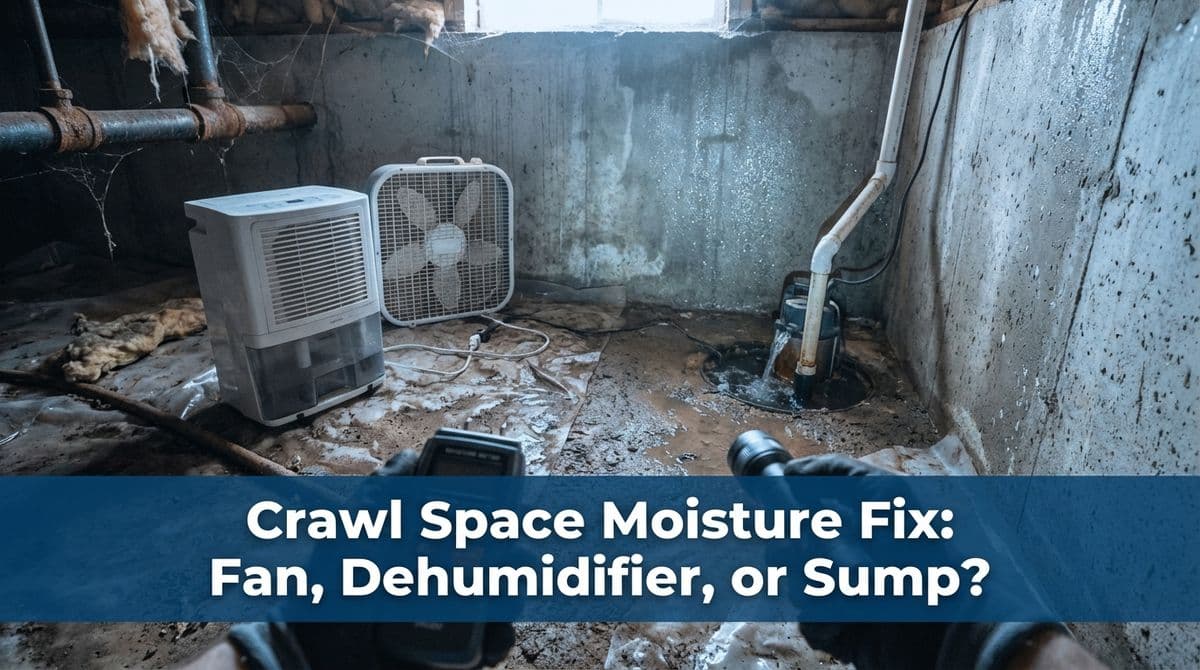
When a “Dry” Foam-Insulated Crawl Space Starts Taking on Water
We recently got a call from a homeowner — let’s call him Mark — who had a brand-new foam-insulated crawl space that was supposed to be dry and low-maintenance. Instead, it was quietly turning into a damp, musty mess.
Mark told us his crawl space wasn’t ventilated, the foundation walls were concrete, and groundwater was finding its way in. A contractor friend had suggested adding a ventilating fan with an exhaust, and they were also talking about reinstalling a sump pump. That’s when we entered the conversation, because Mark wanted to know:
- Should we add a vent fan to move air through the crawl space?
- Do we really need a dehumidifier, or is a fan enough?
- Where does a sump pump fit into all of this?
Those are the same questions we hear from a lot of homeowners with foam-insulated, closed crawl spaces. So in this post, we’ll walk through how we thought about Mark’s situation — and how you can decide between a vent fan, a dehumidifier, a sump pump, or some combination of the three.
Step One: Figure Out What Kind of Moisture You Have
One of the first things we asked Mark was simple: “Is groundwater actually coming in?” His answer was yes. That changed the whole game.
In most crawl spaces with moisture problems, you’re usually dealing with one (or more) of these:
- Liquid water coming in (groundwater, seepage, minor flooding)
- High humidity from the air (especially in a sealed foam-insulated space)
- Moisture trapped in materials (wood framing, concrete, soil)
If you have actual water entering the space, we always start there. No amount of fans or dehumidifiers will work well if water keeps coming in and pooling.
What a Sump Pump Can (and Can’t) Do in a Crawl Space
In Mark’s crawl space, there had been an old sump system before, and his contractor was planning to put a new pump in. We were on board with that part of the plan.
What a sump pump does well:
- Collects and removes liquid water from under or around the crawl space
- Helps keep water from pooling and saturating the soil
- Reduces the chance of standing water, mud, and repeated shallow flooding
What a sump pump does not do:
- It does not lower humidity in the air
- It does not dry out damp wood, concrete, or insulation
- It does not control musty odors or mold by itself
So in a wet, foam-insulated crawl space like Mark’s, we saw the sump pump as step one: get rid of the groundwater. Then we still had to deal with the moisture trapped in the space.
Why We Recommended a Dehumidifier Over Just a Vent Fan
Mark’s friend had suggested a ventilating fan and exhaust. To do that, we’d have to cut at least two 8-inch holes through the concrete foundation walls: one to bring air in, one to push air out. Mark was understandably worried about cutting holes too low and risking water seeping in.
We understood the logic behind the fan idea, but this is where we respectfully disagreed and leaned toward a different approach:
Once moisture gets into a closed, foam-insulated crawl space, simple air exchange usually isn’t enough to dry it out — especially when groundwater has been present.
That’s why we recommended a crawl space dehumidifier system instead of relying on just a fan. A properly sized dehumidifier:
- Physically removes water from the air and drains it away
- Can be set to maintain a specific humidity level (often around 50–60%)
- Helps dry out damp surfaces over time
- Works without cutting big openings in your insulated foundation
We’ve seen plenty of crawl spaces where homeowners tried fans first. The air moved, but the moisture simply cycled around, or worse, humid outdoor air made things soggier. In Mark’s case, with groundwater and a foam-sealed environment, we knew a dehumidifier was the more dependable way to truly dry the space.
When a Vent Fan Still Makes Sense
Does that mean a vent fan is always a bad idea? Not necessarily. There are situations where a fan can be helpful — sometimes alongside a dehumidifier and sump pump.
A ventilating fan can make sense when:
- The crawl space is not fully sealed and you already have exterior vents
- You’re dealing mainly with stale air and odors, not groundwater
- Outdoor air is cooler and drier than the crawl space air (seasonally)
- You have specific building code or combustion-air requirements
However, in closed, foam-insulated foundations like Mark’s, cutting new openings for fans can:
- Undermine the whole idea of a sealed, conditioned crawl space
- Introduce humid outdoor air that condenses on cool surfaces
- Create new pathways for insects or even water intrusion if placed too low
That’s why we’re cautious with fans in these systems. We’d rather keep the shell intact and control humidity mechanically with a dehumidifier.
How to Choose: Fan, Dehumidifier, Sump — or All Three?
Here’s the basic decision process we walked through with Mark, and that you can use for your own home:
- Do you have standing water or obvious seepage?
If yes, start with drainage and a sump pump. You can’t dehumidify puddles. - Is the crawl space insulated and mostly sealed with foam?
If yes, a dehumidifier is usually the main workhorse. Keep that space closed and controlled. - Is outdoor air consistently drier than your crawl space air?
If yes, a fan may help as a supplement in some designs — but be careful not to defeat the purpose of a sealed system. - Do you see mold, musty smells, or condensation on pipes and framing?
That’s a sign humidity has been high for a while. A dehumidifier is almost always part of the solution.
Our Practical Recommendations for Foam-Insulated Crawl Spaces
For homes like Mark’s with foam-insulated, concrete-walled crawl spaces, here’s the approach we typically lean toward:
- Address water entry first: gutters, grading, drains, and a properly installed sump pump, if needed.
- Keep the crawl space sealed: avoid unnecessary large openings in the foundation if you’re treating it as a closed, conditioned space.
- Install a dedicated dehumidifier: sized for the square footage and tied into a reliable drain (often toward the sump).
- Monitor humidity: a simple hygrometer can tell you if you’re staying in that 50–60% relative humidity sweet spot.
Every crawl space is a little different, which is why we scheduled a site visit with Mark to look at the layout, the existing sump location, and the best way to route drainage and any ducting.
If you’re staring at a damp, foam-insulated crawl space and aren’t sure whether to cut in vents, add a fan, install a dehumidifier, or overhaul your sump system, you don’t have to guess. We’re happy to take a look, talk through the options, and design a solution that actually dries the space — not just moves the moisture around.