Why Your Radiant Heat Needs a Pre-Season Tune-Up
Radiant heat seems fine now, but hidden issues can cause big winter problems. Learn why a pre-season tune-up protects comfort, safety, and your home.
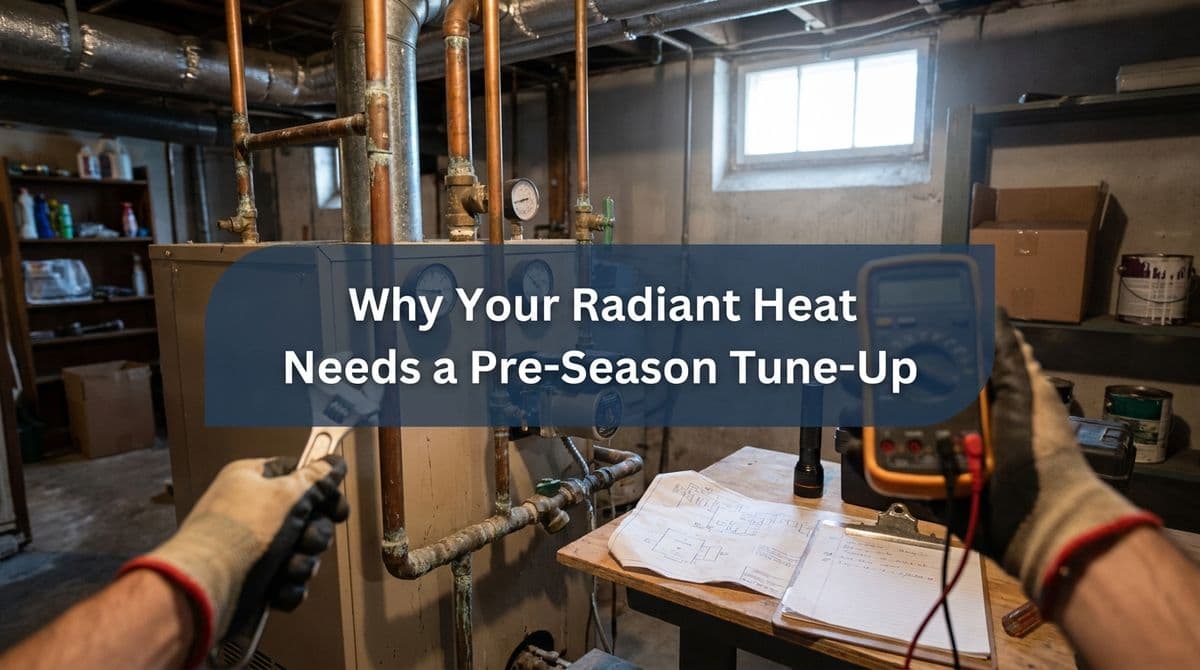
Why We Recommend a Radiant Heat Tune-Up Before Winter
We recently got a call from a customer — let’s call him Mike — who spends his summers up in the mountains. He said, “The system’s been fine, but it hasn’t been serviced since it was installed. I just want to make sure I’m not low on fluid or something weird’s going to happen… you know, turn it on and it explodes.”
Mike’s radiant heating system seemed to be working perfectly. No obvious leaks, no strange noises, no cold spots. But he still wanted a pre-season tune-up while he was in town for the summer so he’d be ready when the snow flies.
That call pretty much sums up why we recommend a radiant heating check before you need heat — even if everything “seems fine.” By the time there’s a visible problem, it’s often more expensive and inconvenient to fix.
Radiant Heat Is Quiet and Hidden — That’s the Problem
One of the best parts about radiant heating is how invisible it is. No loud blowers, no dusty vents, no big wall registers. Just quiet, even warmth from your floors or panels.
The downside? Because everything is so quiet and out of sight, early warning signs are easy to miss. You don’t always get the obvious “my furnace won’t start” moment. Instead, little issues build up season after season until something fails on the coldest weekend of the year.
With Mike, he wasn’t calling because something was broken. He simply knew it hadn’t been serviced since install and was smart enough to think about things like system fluid levels, boiler health, and safety before he left for a long hike or a long trip.
What We Check in a Radiant Heating Tune-Up
When we schedule a pre-season radiant tune-up, we’re looking at much more than just “does it turn on.” Here are a few of the big items we typically inspect:
- Boiler or heat source – We check burners, heat exchanger, ignition, safeties, and venting for proper operation and signs of wear or corrosion.
- System pressure and expansion tank – Low pressure or a failing expansion tank can lead to air in the lines, banging noises, and even leaks.
- Fluid condition – If you have a glycol (antifreeze) mix, we test its strength and pH. Old or diluted fluid can lose freeze protection and corrode components.
- Pumps and valves – We verify that circulator pumps, zone valves, and manifolds are operating correctly and not seizing up from sitting idle.
- Air removal – Air pockets are the enemy of even radiant heating. We make sure air vents and separators are doing their job.
For a system like Mike’s — tucked away in a mountain home that may sit empty for stretches of the year — these checks are especially important. A small leak or pressure issue can go unnoticed for months if you’re not there full time.
“It Seems Fine” vs. “It’s Actually Safe and Efficient”
When Mike called, he told us he’d “bet it’s fine,” but he didn’t want any surprises. That’s the right mindset. There’s a big difference between a system that runs and a system that’s safe, efficient, and protected against winter conditions.
Here’s what a tune-up can prevent, even when everything appears normal:
- Freeze damage – If glycol levels are low or diluted, piping in walls or floors can freeze and burst in extreme cold.
- Corrosion and sludge – Poor water chemistry eats away at metal components, shortens pump life, and clogs manifolds.
- Minor leaks becoming major – A tiny drip at a fitting or valve can slowly damage floors, ceilings, and framing over time.
- Boiler lockouts – Ignition or safety components that are borderline today can leave you with no heat on the first truly cold night.
Some of these issues don’t give you much warning. A pre-season visit lets us catch them while they’re still simple adjustments instead of costly emergency repairs.
Signs Your Radiant System Needs Service Sooner
Even if you get regular pre-season tune-ups, there are some signs you shouldn’t ignore during the heating season:
- Rooms or zones that used to be warm now feel noticeably cooler.
- New noises: ticking, gurgling, or banging in floors or pipes.
- Boiler cycling on and off more than usual.
- Visible leaks, rust, or staining near the boiler or manifolds.
- Higher energy bills without a change in weather or usage.
If you notice any of these, don’t wait for the next scheduled tune-up. A quick service call can keep a small problem from turning into a mid-winter system failure.
Radiant vs. Forced-Air Tune-Ups: What’s Different?
Homeowners often ask us if a radiant tune-up is any different from the furnace check they’re used to. The answer: same goal, different details.
- Forced-air systems focus on filters, blowers, ductwork, gas or electric burners, and safety controls to ensure clean airflow and safe combustion.
- Radiant systems focus on water chemistry, piping, manifolds, pumps, pressure, and in-floor or in-wall distribution.
Both types of systems absolutely benefit from yearly pre-season checks. The main difference is that radiant issues tend to be more “hidden” and can affect your home’s structure (floors, slabs, walls) if leaks or freezing occur. That’s why we’re extra cautious with mountain and vacation homes like Mike’s.
Why Scheduling Ahead Saves You Money and Stress
In Mike’s case, we coordinated his tune-up while we were already scheduled in his area, so he didn’t have to shoulder the full travel cost. We also promised to give him a couple of days’ notice so he wouldn’t miss us while he was out hiking.
When you book a pre-season tune-up early, we can:
- Group visits in your neighborhood to reduce travel charges.
- Give you advance notice so you can plan around work or trips.
- Fix any issues while parts are readily available — before the first cold snap rush.
If your radiant system hasn’t been serviced since install — or it’s just been a few years — now is the ideal time to have us look it over. Even if you’d “bet it’s fine,” a quick pre-season tune-up can buy you a whole winter of peace of mind.