Leaking Hot Water Pipe? What To Do Before Help Arrives
Found a leaking hot water pipe or pinhole near your water heater? Learn what to shut off, how to protect your home, and when to call a pro.
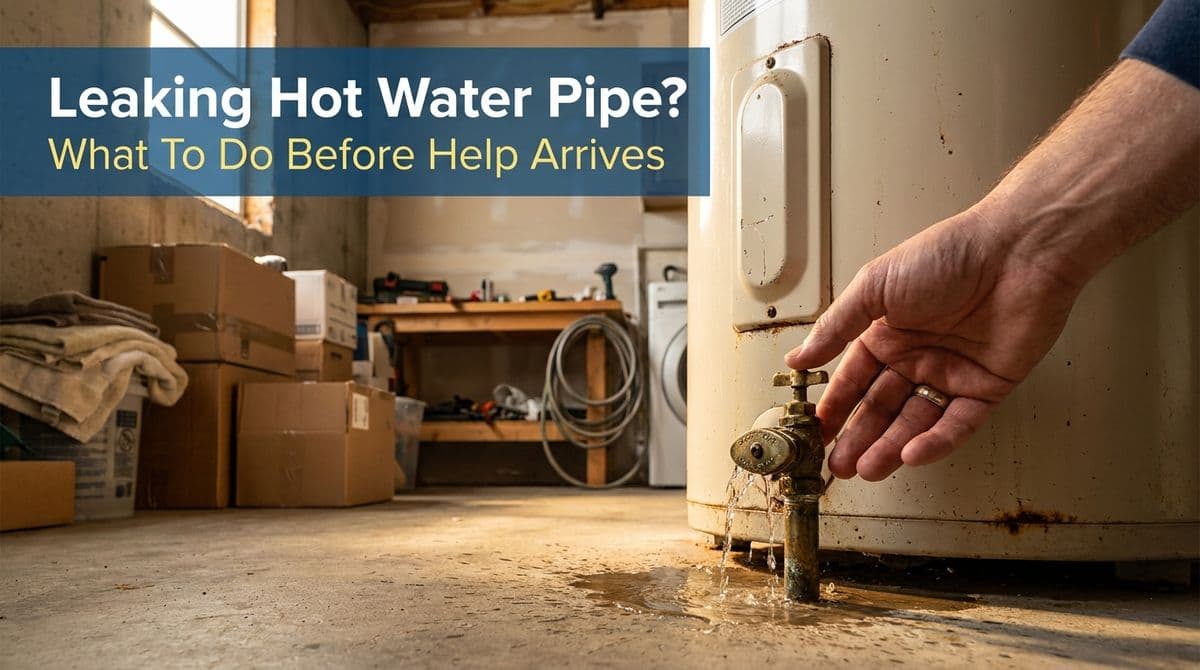
What To Do When You Spot a Leaking Hot Water Pipe Near Your Water Heater
We recently got a call from a customer — let’s call him Mike — early one morning, and he was more than a little stressed. Overnight, a pinhole leak had opened up on the hot water line right above his water heater, right at an elbow fitting. The leak had been spraying all night, his basement floor was flooded, and to top it off, he had an important doctor’s appointment he couldn’t miss.
Mike’s first question was simple: “What can I do right now to stop this water before I leave the house?” From there, we walked him through some quick steps to get things under control until a tech could get out there.
If you ever find yourself in Mike’s situation — water spraying from a hot water pipe or a tiny pinhole near your water heater — here’s what we recommend you do, step by step.
Step 1: Stay Safe and Kill the Water to the Leak
When Mike called, the leak was on the hot water pipe coming out of the top of the water heater, at an elbow. That detail mattered, because it told us he was dealing with a domestic hot water line, not a boiler or heating loop.
In his case, we were able to tell him: if he shut off the cold water supply valve going into the water heater (usually on the right-hand side on top of the tank), it would stop feeding water to the leak. The tank would stay full and he wouldn’t make the flooding any worse.
How to find and shut off the right valve
Above most water heaters, you’ll see two main pipes:
- Cold water in: Often on the right, sometimes labeled “C” or “Cold.” May have a shutoff valve just above the heater.
- Hot water out: Often on the left, sometimes labeled “H” or “Hot,” going out to your faucets.
If the leak is on the hot line just above the water heater, try this:
- Locate the cold water shutoff valve going into the heater.
- Turn the valve clockwise until it stops (for a ball valve with a lever handle, turn it so the handle is perpendicular to the pipe).
- Listen and watch: the spraying or dripping should slow and then stop.
If you can’t find that valve, or it won’t turn, your backup is the main water shutoff to the house. That’s usually where the water line first enters the building (near a meter, in a mechanical room, or along a foundation wall).
Step 2: Protect Your Home From Water Damage
In Mike’s basement, there was a floor drain, but the spray from the leak was missing the drain completely. So even though the drain existed, it wasn’t doing him any good.
While we had him working on the shutoff, we also talked through a few quick damage-control ideas you can use:
- Redirect the water: If the leak is still dripping a bit, you can temporarily wrap a towel or rag around the pipe and tuck the end into a bucket or direct it toward a floor drain. This doesn’t fix the leak — it just buys you time.
- Contain the puddles: Use towels, a shop vac, or a squeegee to move standing water toward a floor drain if you have one.
- Protect nearby items: Move cardboard boxes, furniture, and electronics away from the wet area.
Mike asked about tape as a quick fix. The reality is, regular tape on a pressurized hot water line is usually not reliable. It might slow things down for a few minutes, but it’s not something you should trust if you’re leaving the house.
Step 3: Do NOT Rely on DIY “Permanent” Pinhole Fixes
A pinhole leak at an elbow like Mike had is usually a sign of pipe corrosion or a failure in the fitting. That means the problem is often bigger than that one tiny hole.
You may see videos online suggesting:
- Wrapping the pipe with rubber and hose clamps
- Coating the area with epoxy putty
- Layering on duct tape or “miracle” plumbing tape
Those might slow a drip for a short time, but on a pressurized, hot water line they’re almost always temporary at best, and can fail suddenly. For a true, lasting repair, that section of pipe or fitting usually needs to be cut out and replaced by someone with the right tools and materials.
Step 4: When to Shut Off the Power or Gas
Mike’s leak was on the hot water piping, not coming from the tank itself, and the water level in the heater wasn’t dropping once the cold supply was shut off. That meant he didn’t necessarily have to shut down the water heater before heading to his appointment.
But there are situations where you should shut the unit down for safety:
- The tank itself is leaking or you suspect it’s draining empty.
- The leak is spraying directly onto electrical components or the gas control.
- You’re shutting off the main water to the whole house for an extended time.
In those cases:
- For gas water heaters, turn the control knob to “Pilot” or “Off”.
- For electric water heaters, switch off the dedicated breaker at your panel.
Step 5: Call a Pro and Coordinate Around Your Schedule
Like Mike, you may discover a leak at the worst possible time — right before work, an appointment, or a trip. In his case, we coordinated with one of our techs who was already working nearby and arranged a visit later that afternoon when someone would be home.
When you call a plumber, it helps to be ready with:
- Whether the leak is on the hot or cold line, and if it’s near the water heater.
- Whether you’ve shut off the cold supply or the main water already.
- Any photos you can text or email showing exactly where the leak is.
The more details you can share, the easier it is for us to give you good over-the-phone advice (like which valve to shut, as we did with Mike) and show up prepared with the right fittings and pipe for a one-visit repair.
Key Takeaways If You Find a Pinhole Leak Near Your Water Heater
- First priority: Shut off the cold supply to the water heater or, if needed, the main water to the house.
- Protect your home: Redirect water to a drain or bucket and clean up standing water quickly.
- Skip “permanent” tape fixes: They’re temporary at best on hot, pressurized lines.
- Think safety: If the tank might run dry or water is hitting electrical/gas parts, shut down the heater.
- Call a professional: Pinhole leaks often signal corrosion that needs a proper pipe or fitting replacement.
If you’ve just discovered a leak like this and aren’t sure which valve to turn or what to do first, give us a call. We walk homeowners through situations like Mike’s all the time and can help you stabilize things over the phone while we get a tech on the way.