What Homeowners Need to Know About Aging Triangle Tube Boilers
We recently helped a homeowner with an older Triangle Tube boiler and a failing igniter. Here’s what you should know about maintenance, parts, and planning ahead.
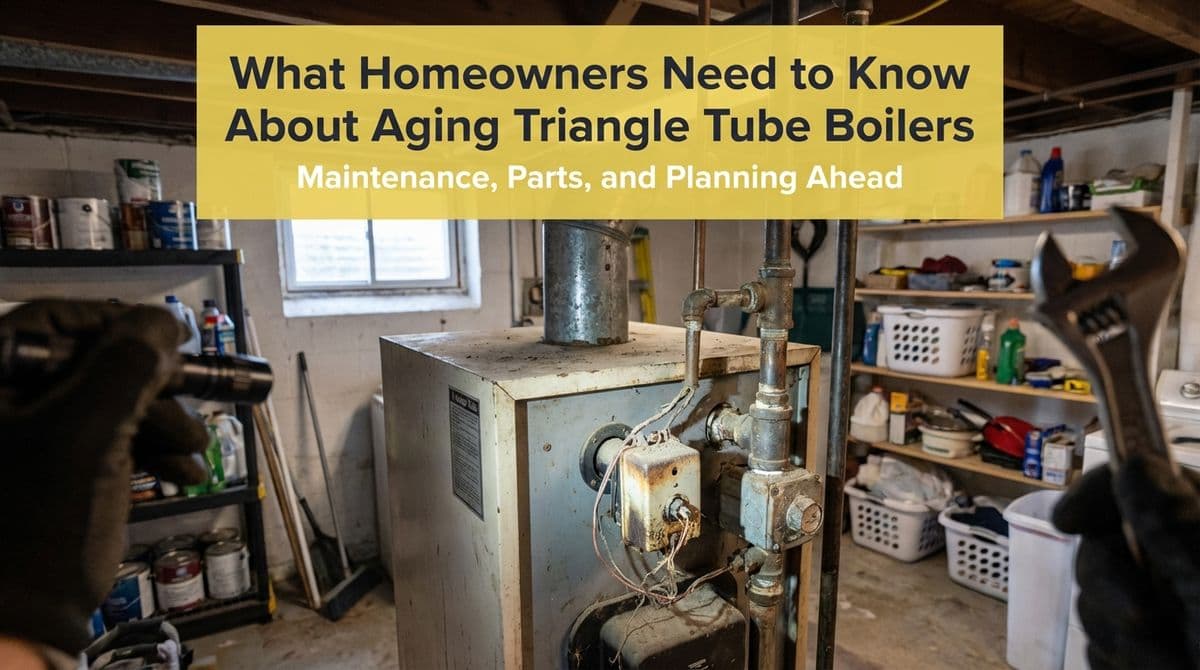
I’ve been working on Triangle Tube boilers and radiant systems in our area for years, so I tend to get the odd “my boiler’s still running, but…” phone call. We recently got a call from a homeowner — let’s call him Dave — with a Triangle Tube Solo 110 that’s around 10 years old. The boiler was heating just fine, but he was worried about two things: it hadn’t been cleaned in over a year, and he’d heard that igniters and other parts were getting hard to find.
How We Help Homeowners With Aging Triangle Tube Boilers
As I talked with Dave, I recognized the situation right away. The system only runs in the winter for heat (no domestic hot water), it’s been a bit overdue for maintenance, and there’s a big question mark around the future of parts — especially the igniter, which has had recalls and redesigns over the years.
That conversation is one I’m having more often, so I figured I’d walk you through the same things I explained to him: how long these boilers usually last, what’s going on with parts, and what you can do now so you’re not left in the cold later.
Triangle Tube Solo Boilers: Lifespan and Reality Check
When homeowners ask how long a Triangle Tube Solo 110 should last, I tell them this: with proper maintenance, 15–20 years is a realistic expectation for the boiler itself. By “proper maintenance,” I mean annual cleanings, combustion checks, and prompt attention to small issues before they become big ones.
In Dave’s case, the boiler was around the 10-year mark. That’s right in the window where:
- Efficiency starts to drop if it hasn’t been cleaned regularly
- Igniters and sensors may start failing more often
- You want to begin planning for eventual replacement, even if you’re not there yet
So if your Triangle Tube is in that 8–15 year range, you’re not in crisis mode, but it’s smart to think ahead — especially now that the manufacturer and some original parts are no longer easily available.
The Igniter Problem: Recalls, Kits, and Limited Parts
Dave’s biggest concern was the igniter. He’d heard there was a recall and that you couldn’t just swap in a new one. He was partly right. Triangle Tube changed designs over the years, and in many cases you can’t simply buy the old-style igniter and plug it in. You may need a conversion or upgrade kit that includes:
- A redesigned igniter
- Matching wiring or harnesses
- Sometimes a new control board or mounting hardware
On our call, I explained that parts for these older units are hit-or-miss now. Some wholesalers still have inventory, and there are upgrade kits out there, but they’re not guaranteed to be on the shelf when yours fails. That’s why I encourage homeowners with older Triangle Tube boilers to think of igniters as a “when,” not “if,” item.
Should You Keep a Spare Igniter on Hand?
With systems like Dave’s, I often recommend trying to source a compatible igniter or kit before the existing one fails. If we can find the right parts, keeping a spare on the shelf can mean the difference between a quick visit and a multi-day no-heat situation in the middle of winter.
That said, it’s important that a pro verify the exact model, serial number, and revision of your boiler so we don’t order something that doesn’t fit or isn’t approved for your unit.
Maintenance: What You Can Check vs. What I Need to Do
During our conversation, Dave mentioned the boiler hadn’t been cleaned in a year or two, but it “seemed to be working fine.” That’s incredibly common — and exactly why I like to explain what’s safe for a homeowner to look at and what should be left to a technician.
Safe Checks for Homeowners
Here are a few things most homeowners can safely keep an eye on between professional visits:
- Pressure and temperature gauge: Make a habit of glancing at it. If it’s suddenly way higher or lower than normal, call a pro.
- Leaks and corrosion: Look for any drips, rust, or staining around the boiler and nearby piping.
- Vent and intake: From the outside, make sure your exhaust and intake terminations aren’t blocked by snow, leaves, or debris.
- Noises and smells: New banging, rumbling, or a strong gas or burning odor is a sign to shut things down and call right away.
Tasks That Belong to a Professional
On the other hand, there are things I never recommend homeowners tackle themselves on a Triangle Tube or any high-efficiency boiler:
- Combustion analysis: This requires a calibrated analyzer and training. We adjust gas pressures and air settings to keep the boiler burning safely and efficiently.
- Burner and heat exchanger cleaning: These involve gas components, gaskets, and tight spaces where a wrong move can cause leaks or damage.
- Igniter replacement or wiring changes: Especially now, with recall kits and design changes, you want someone who knows the specific boiler model and safety codes.
When Dave asked how we schedule this kind of work, I told him what I tell everyone: if it’s a no-heat emergency, we do everything we can to get there the same day. For maintenance and cleaning, we schedule you out a bit so we can spend the time needed without rushing — no “five stops in an afternoon” kind of pressure.
Planning Ahead: Repair, Parts Strategy, or Replacement
With an aging Triangle Tube, you basically have three options, and we talked through all of them on Dave’s call:
- Maintain and monitor: If the boiler’s in good shape, we clean it annually, check combustion, and keep an eye on key components.
- Secure critical parts: If we can locate an approved igniter/kit and any other high-failure items, we get them now, while they’re still available.
- Plan for replacement: If the boiler is older, inefficient, or parts are nearly impossible to find, we start talking about timelines and options for a new unit before it fails.
For Dave, the plan was to schedule a thorough cleaning and combustion check, then see if we could track down the correct igniter kit. That way he’s covered for the near term, but he also has a clearer picture of when it’ll make sense to put his money into a new boiler instead of chasing rare parts.
Have an Older Triangle Tube Boiler? Here’s My Advice
If you’re in a similar spot with a Triangle Tube Solo or other aging boiler, here’s what I’d suggest:
- Get a full maintenance visit and combustion check on the books if it’s been more than a year.
- Ask specifically about the health of your igniter and the availability of replacement parts.
- Talk with your technician about a realistic remaining lifespan and a replacement budget, so you’re not surprised down the road.
You don’t have to panic just because your boiler’s older, but you also shouldn’t wait until it’s 10°F outside and the igniter finally gives up. A little planning now — and a technician who’s familiar with these Triangle Tube quirks — can save you a lot of stress later.