Electric Furnace Has Power But Won’t Start? Safe DIY Checks
Electric furnace getting power but not turning on? Here’s how we walk homeowners through safe DIY checks before it’s time to call a pro.
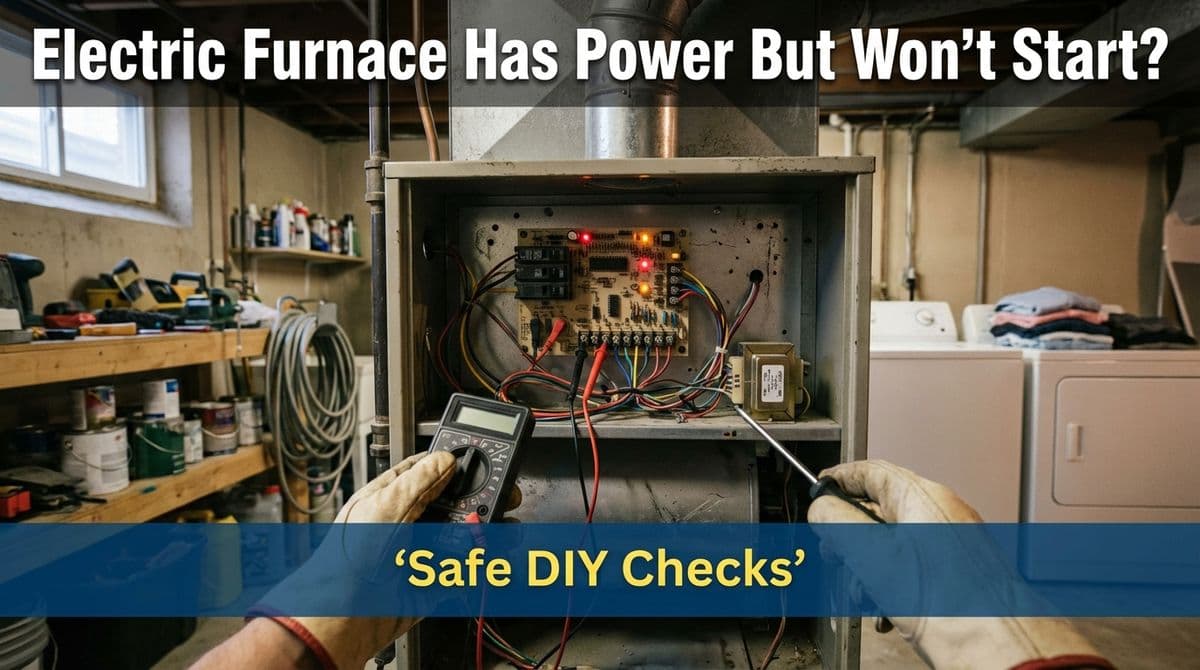
We recently got a call from a homeowner — we’ll call her Laura — who was understandably frustrated. Her older electric Coleman furnace had stopped working a couple of days earlier. She’d already checked the breaker and thermostat and even used a tester to confirm the furnace was getting power… but it still wouldn’t turn on.
As we talked through her situation, she mentioned she’d seen online that it could be a sequencer, a limit switch, or a power relay. That’s exactly the kind of call we get a lot: the furnace has power, nothing runs, and the homeowner wants to know what they can safely check before scheduling a service visit.
First Things First: Safety Comes Before DIY
Before we walk any homeowner through troubleshooting on the phone, we always start with the same message: electric furnaces can be dangerous if you’re not careful. They use high voltage and can draw a lot of amperage.
Here are the ground rules we share with homeowners like Laura:
- Turn off power at the furnace disconnect or breaker before removing any access panels.
- Never touch exposed wiring or terminals with your fingers or metal tools.
- Don’t bypass safety switches (like taping down a door switch) to “test” things.
- If you’re not sure what you’re looking at, stop and call a licensed HVAC pro.
What we tell homeowners on the phone is simple: if a step requires opening electrical compartments or using anything more advanced than a simple non-contact tester, that’s where DIY should usually stop.
Basic Checks When the Furnace Has Power but Won’t Run
In Laura’s case, she had already confirmed the breaker was on and the thermostat was calling for heat. If you’re in the same boat, here are the safe, basic checks we typically walk people through.
1. Confirm the Thermostat Settings
Even if the display is lit, it’s worth double-checking:
- Make sure the thermostat is set to Heat, not Cool or Off.
- Raise the set temperature at least 5 degrees above room temperature.
- If it’s battery-powered, replace the batteries just to rule that out.
- Check for a delay: some thermostats take a few minutes before turning on equipment.
If the thermostat clicks and you still get no blower, no warmth, and no sound from the furnace, move on to the next checks.
2. Verify the Breaker and Any Switches
You may see power at the furnace with a tester, but we still want to confirm the obvious:
- Find the furnace breaker in your electrical panel. Flip it fully off and back on to be sure it’s reset.
- Look for a service switch near the furnace (it can look like a light switch). Make sure it’s on.
- Check the door switch: many furnaces have a safety switch that cuts power if the panel door isn’t seated correctly.
We’ve seen more than one “dead” furnace come back to life because a panel wasn’t fully latched or a nearby switch was accidentally bumped off.
3. Listen for Any Signs of Life
With the thermostat calling for heat and power confirmed, stand by the furnace and listen:
- No clicks, no fan, no hum at all: often points toward a control, sequencer, or relay issue.
- Fan runs, but only blows cold air: may indicate heating elements not engaging, possibly a sequencer or high-limit problem.
At this point, we’re usually moving past what we recommend as safe DIY and into the territory of professional diagnosis.
Sequencer, Limit Switch, Power Relay – What Are They?
When Laura mentioned those three parts, she wasn’t wrong. With an electric furnace that has power but doesn’t start, we often end up looking closely at these components.
What a Sequencer Does
The sequencer controls the order and timing of the electric heating elements and sometimes the blower. Instead of all the heating elements coming on at once (which would cause a huge power spike), the sequencer turns them on in stages.
If a sequencer fails, you might see:
- Furnace that never heats, even though there’s power.
- Blower running but no warm air.
- Intermittent operation: works sometimes, silent other times.
Because sequencers are specific to furnace models and wiring setups, this is usually where we recommend bringing in a pro who can source the right replacement and verify it’s installed correctly.
What a Limit Switch Does
The high-limit switch is a safety device. It shuts the furnace down if it gets too hot, protecting the unit from overheating or causing a fire.
If a limit switch is tripping or has failed, you might notice:
- Furnace starts, then shuts off quickly.
- No heat because the limit is stuck open and won’t let the furnace run.
Sometimes a dirty filter or blocked airflow causes the limit to trip repeatedly. That’s why changing filters regularly is one of the simplest ways to avoid these problems.
What a Power Relay Does
The power relay is like a heavy-duty switch controlled by the thermostat or control board. When it receives the signal for heat, it closes and sends power to the blower or heating elements.
A bad relay can cause:
- No blower operation at all, even though other parts have power.
- A furnace that stays silent despite the thermostat calling for heat.
Diagnosing a relay properly requires a meter and knowledge of what voltages you should see, which is why we don’t encourage most homeowners to tackle this themselves.
What You Can Safely Do Before Calling a Pro
For homeowners like Laura, we outline a short checklist they can complete without diving into live electrical work:
- Replace or clean the air filter. A badly clogged filter can cause all sorts of overheating and safety trips.
- Check supply and return vents. Make sure furniture, rugs, or boxes aren’t blocking airflow.
- Look for obvious damage. With power off, remove the front panel and visually inspect for burnt wires or melted insulation (do not touch components).
- Note any patterns. Does the furnace ever start? Does the fan alone work? Write this down for your technician.
Having this information ready makes your service visit faster and more accurate, and can sometimes save a second trip.
What to Expect When a Technician Visits
When we send a technician out to an electric furnace that has power but won’t start, the visit typically follows a pattern:
- Visual and safety inspection: Confirm wiring, panel condition, and that nothing is burnt or loose.
- Electrical testing: Use a multimeter to check voltage at the sequencer, relays, limit switches, and heating elements.
- Component diagnosis: Identify which part is failed or out of spec — often one of those sequencers, limit switches, or relays.
- Repair options: Review part costs, labor, and whether it makes sense to repair or consider replacement (especially with very old units).
By the end of the appointment, you should know exactly what failed, why it failed, and what you can do going forward to reduce the chance of a repeat issue.
How Regular Maintenance Helps Prevent “Dead” Furnaces
We always remind homeowners that furnaces rarely fail out of nowhere. A few simple habits can dramatically reduce surprise no-heat calls:
- Change filters regularly (every 1–3 months, depending on the filter and home conditions).
- Keep the area around the furnace clear so it can “breathe” and stay cool.
- Schedule annual checkups so a tech can spot weak relays, hot spots on wiring, and failing sequencers before they quit.
In Laura’s case, the issue likely came down to a failing sequencer on an older unit. We helped her connect with a furnace specialist who could source the right parts and get everything back up and running safely.
If your electric furnace has power but won’t turn on, you can follow the safe steps above — and when you’re ready for a thorough, professional diagnosis, we’re here to help get the heat back on.