Boiler Making a Loud Clunking Noise? Here’s What It Means
Boiler making a loud clunking noise? Learn what’s normal, what’s not, common causes, and when it’s time to call a professional for service.
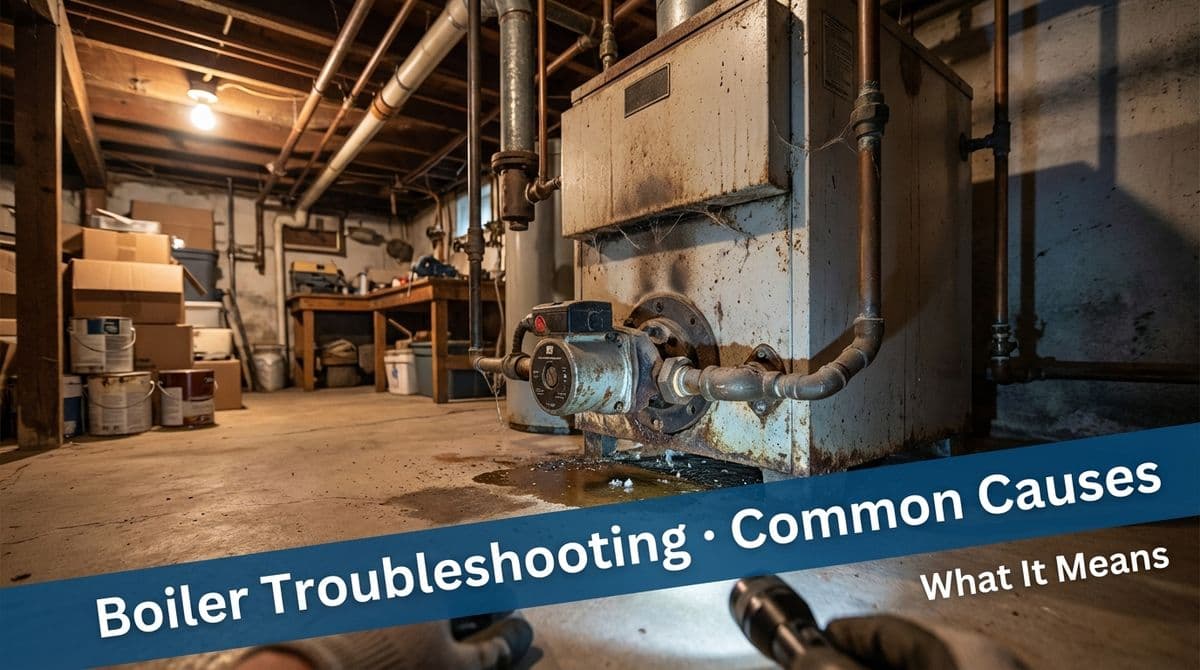
Why Is My Boiler Clunking? A Real Call From a Cabin Owner
We recently got a call from a customer — let’s call him Mark — who has a cabin up in the mountains. He told us he kept hearing this slow, deep “clunk” every few minutes. At first, he and his family thought the neighbors were outside chopping wood late into the night. But when the noise kept going and they stepped outside, it was quiet. The “wood chopping” was coming from inside the cabin.
Mark finally tracked the sound down to the boiler closet. He said, “The heat’s working great, hot water is fine, but this new boiler keeps clunking. It’s the one on the left with that small reservoir on the wall — the level in that tank looks pretty low. Could that be the problem?”
As soon as he mentioned that little wall-mounted reservoir, we knew exactly what he was hearing: a small pump inside that unit, cycling and making a slow, rhythmic clunk as it ran.
What That Clunking Noise Actually Was
In Mark’s case, the boiler itself wasn’t failing. The sound was coming from a small pump in the secondary reservoir (often part of a condensate or circulation system). These pumps can make a distinct clunk or thunk when they switch on and off, especially if:
- The pump is mounted to a wall or framing that acts like a drum
- The pump is cycling more often than normal
- The fluid level is low or fluctuating
So while the noise was annoying (and a little eerie at night), the system was still heating just fine. That’s an important distinction: loud doesn’t always equal dangerous, but it’s always worth checking out.
Common Causes of Loud Boiler Clunking Noises
When someone calls us about a clunking or banging boiler, we usually start by asking a few questions. Based on what we hear, the issue often falls into one of these categories:
1. Pump or Small Auxiliary Unit Cycling
This was Mark’s situation. Many modern systems have:
- Small circulation pumps
- Condensate pumps
- Secondary or buffer tanks with internal components
These can make:
- A single, solid clunk when starting or stopping
- Occasional tapping or knocking as they cycle
If the noise is slow, rhythmic, and seems to come from a specific box or small tank, it may be this kind of normal-but-annoying operation or a minor issue with the pump.
2. Air in the System
Trapped air in the heating loop can cause:
- Gurgling in baseboards or radiators
- Clunking or knocking when flow starts and stops
- Uneven heating in different rooms
Bleeding air from the system is usually a straightforward job for a pro and can quiet things down significantly.
3. Water Hammer or Sudden Flow Changes
On some systems, fast-closing valves or sudden pump starts can cause a sharp bang or series of bangs. That’s often called water hammer. It’s more common in plumbing, but certain boiler piping layouts can experience similar effects.
4. Mineral Buildup and Kettling
On older boilers, or in areas with hard water, minerals can build up inside the heat exchanger. This can cause:
- Rumbling or kettling sounds (like a kettle boiling)
- Occasional clunks as bubbles form and collapse
If your boiler is 10+ years old and getting noisier each year, mineral buildup is a likely suspect.
What’s Normal Boiler Noise vs. a Red Flag?
No boiler is completely silent, but certain sounds are more concerning than others. Here’s a quick way to think about it:
Sounds That Are Often Normal
- Soft humming when the burner or pump runs
- Gentle whooshing when the system starts
- Occasional single clunk from a small auxiliary pump (like Mark’s cabin)
These sounds may still be worth checking if they’re new or very loud, but they don’t usually point to an emergency.
Sounds That Need Prompt Attention
- Repeated loud banging in the pipes or boiler
- Metal-on-metal scraping from inside the unit
- Loud rumbling or kettling that gets worse over time
- Any noise accompanied by no heat, no hot water, or an error code
If your boiler is older, noises combined with inconsistent heat, frequent resetting, or visible leaks are all signs it’s time for a professional inspection.
What You Can Safely Check Before Calling
We never recommend taking the boiler apart yourself, but there are a few simple checks most homeowners can safely do:
- Listen carefully and try to pinpoint where the sound is coming from: the boiler, a small wall-mounted box, or the pipes.
- Note how often the noise happens: every few seconds, every few minutes, only when heat starts, etc.
- Look at any small tanks or reservoirs you can see without removing covers. If there’s a sight glass or clear section, note whether it looks low, like Mark noticed.
- Check the thermostats to confirm everything is set normally and the heat actually runs when it should.
Do not remove boiler panels, disconnect wiring, or open any pressurized components. That’s what we’re here for.
How Boiler Age and Type Affect Likely Causes
The age and style of your boiler can change what we suspect first when you mention a clunking noise:
- Newer high-efficiency boilers (like Mark’s): We often look at small pumps, control valves, and condensate components. Noises are frequently related to accessories rather than the main heat exchanger.
- Mid-age systems (5–15 years): We see more issues with circulation pumps, expansion tanks, and air in the system.
- Older boilers (15+ years): Mineral buildup, worn pumps, and outdated controls become more common noise sources, and we start talking seriously about long-term repair vs. replacement.
Info to Have Ready When You Call a Pro
When Mark called us, he gave us a few key details right away — and that helped us narrow down the problem within minutes. When you call, it helps to have:
- Where the sound seems to come from (boiler, wall tank, a certain room)
- What it sounds like (clunk, bang, rumble, whine)
- How often it happens (every few minutes, only when heat turns on, etc.)
- Whether heat and hot water still work
- The approximate age and brand of the boiler, if you know it
Sharing those details can save time on-site and help us come prepared with the right parts and tools.
Preventive Tips to Keep Your Boiler Quiet
While not every noise can be prevented, a little maintenance goes a long way toward keeping your system running quietly and efficiently:
- Annual professional service: A yearly check lets us catch air issues, minor leaks, and pump problems early.
- System flushes when needed: In hard-water areas, periodic cleaning can reduce mineral buildup and kettling noises.
- Keep the boiler area clear: Give the unit and any small wall-mounted pumps room to “breathe” and reduce vibration transfer to walls and shelves.
- Report new noises early: Calling when you first notice a sound, like Mark did, usually means a simpler, less expensive fix.
Noticing a Clunking Noise? We Can Help
If your boiler has started making a loud clunking or banging noise, don’t ignore it — but don’t panic either. As we saw with Mark’s cabin, sometimes the culprit is a small pump or accessory, not a major failure.
Pay attention to where the sound is coming from, how often it happens, and whether your heat and hot water are working. Then give us a call. We’ll track down the source of the noise, explain what’s going on in plain language, and get your system heating quietly again.